


There’s a particular kind of loneliness that ambitious women face even when they are surrounded by others. It’s a feeling of being overwhelmed by responsibilities that often makes it seem like you’re on a remote island, just trying to get by.
Because you’re juggling so many different roles: career ambitions, caregiving, partnership, family, community, and the daily effort of maintaining a healthy, happy self.
And when you hold so many identities, it’s easy to feel like no one truly understands you. But building a community can change everything.
Not because it solves your problems, but because it helps you realize you’re not alone. It provides a mirror of relief, laughter, perspective—a space to let your guard down and be honest with others... and yourself.
However, what many don’t talk about is that it rarely comes from just one community; it takes a collective effort.
Most of us need to be part of different circles of people connected to various parts of who we are, that unique, multifaceted individual you are: a true unicorn.
Building a community without realizing it.
Right after high school, I made a bold move: I moved to DC to attend George Washington University, a school where I didn’t know a single person.
It was intimidating in a way I can still feel in my body when I think about it. But it laid the foundation for something I didn’t realize I was practicing: the willingness to start from zero to find my people.
I sought out those who shared my culture, my passions, and my forward-thinking energy.
And I’ll be honest: I didn’t get it right at first. It took lots of trial and error, a process of elimination, and learning the differences between people I thought I should be around and those where I could truly be myself.
Today, I apply that same philosophy but with a more focused intention.
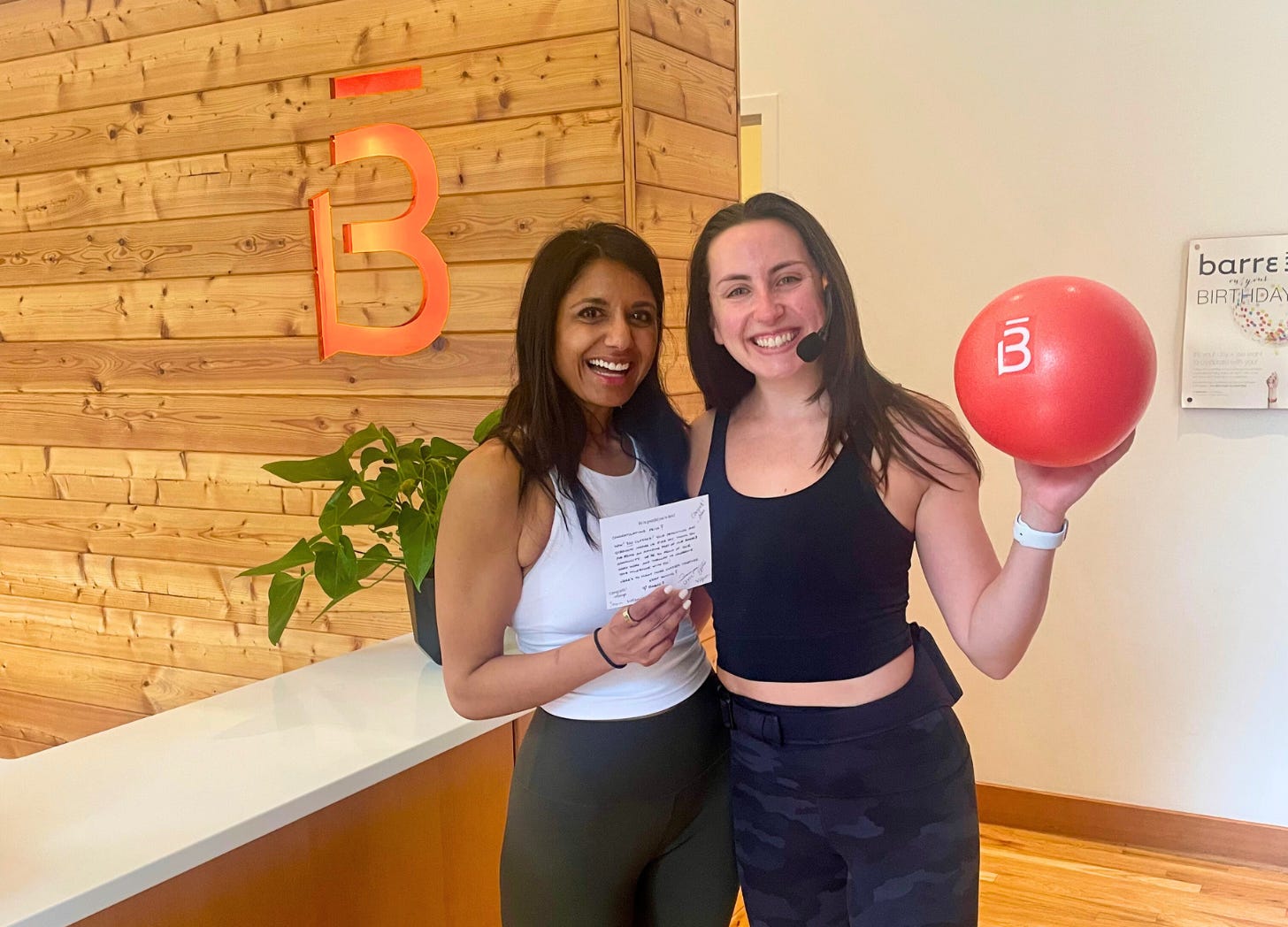
My most valuable communities might seem small from the outside, like my barre3 studio here in Denver. It’s not just about movement; it’s about belonging. It’s the familiar faces who often join me in classes 5 to 6 times a week. But it’s also the quiet support of showing up next to the same women and realizing you’re not navigating life alone.
I’ve also found other communities that help me grow professionally—groups of entrepreneurs or women in business who want to support each other—and those that blend my personal and professional lives, like The Authentic Asian, where it helps me connect my identity and ambition while trying to decide which cultural aspects we want to carry forward and which ones we wish to leave behind.
I’ve also learned something that still surprises me: community can also come from family proximity.
I didn’t grow up with extended family nearby; my family has always been spread across the country and the world. But now, living in a city with a big family network, I see why they say it takes one. For the first time, within a five-mile radius, I have four aunts, a mother-in-law, and multiple cousins.
That kind of closeness has changed how I understand support. Not perfect support, but real support. The kind that shows up in small ways, making life feel more manageable.
”Community didn’t solve all the challenges I was facing, but it made me realize there's no reason to do it alone just to prove you can.”
We are wired for connection.
It was only a few years ago that the then U.S. Surgeon General, Dr. Vivek Murthy, warned us, in the aftermath of the pandemic, about the serious health risks of loneliness and social disconnection, which are comparable to smoking 15 cigarettes per day.
As we continue to normalize the importance of mental health, it emphasizes why, as a tribal society, it’s crucial for us to see finding our people not just as a touchy-feely idea, but as a strategic one.
Because the benefits of being part of a community are powerful in:
Managing stress so you feel less alone during tough times.
Remaining resilient so you have people who mirror your strength back.
Being aligned so you hear yourself more clearly around safe people.
Staying healthy so you can be mentally, emotionally, and physically strong.
And in seasons of motherhood, ambition, and caregiving, community isn’t optional or a luxury. It’s how you stay whole.
Begin with a small step that reflects where you are now.
If building community feels overwhelming, here’s what I want you to remember:
You don’t need a hundred friends.
You need a few meaningful touchpoints.
And you don’t need to find them all at once.
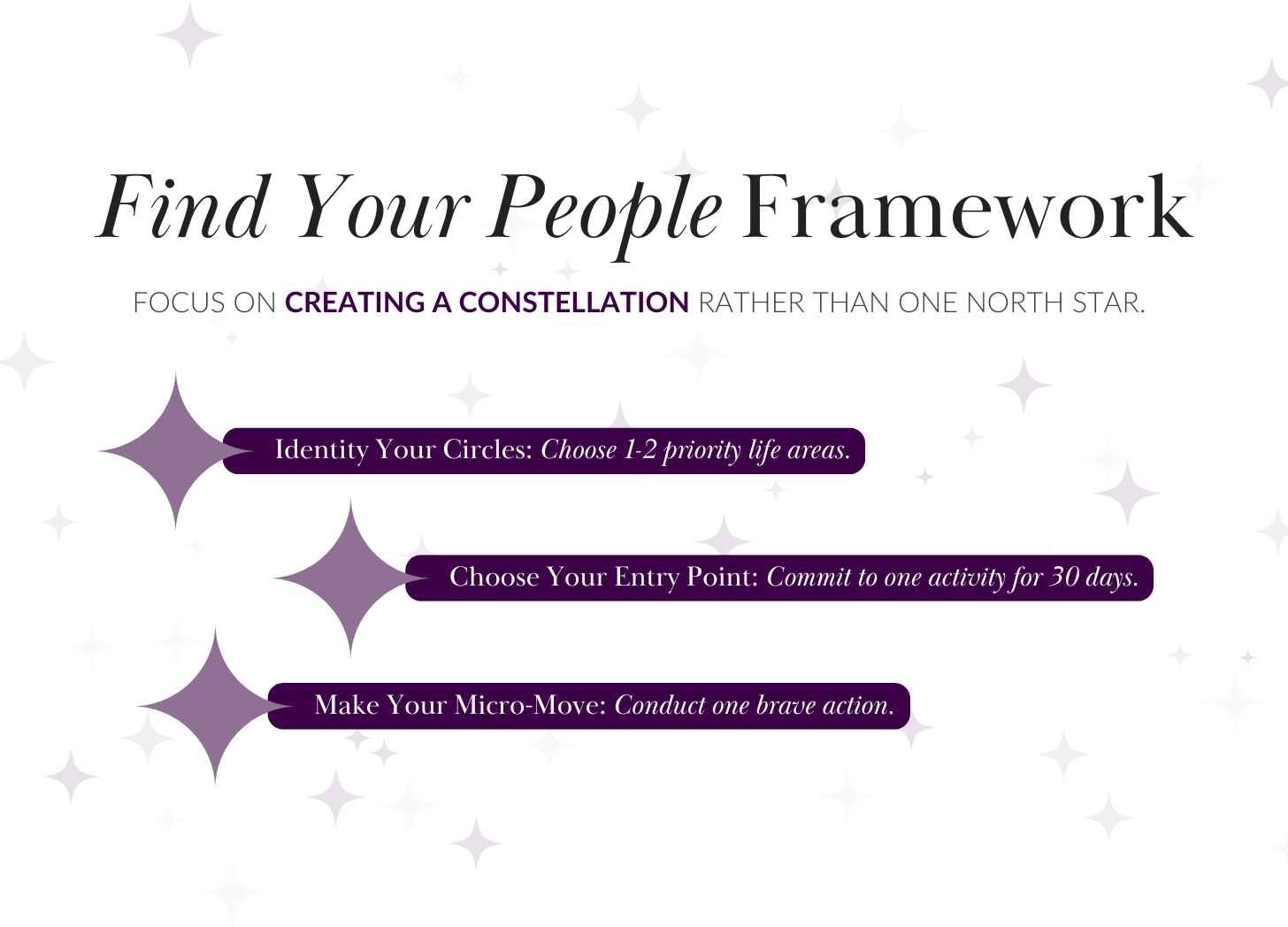
Start small by making small moves toward building your community. Think of it as creating a constellation, rather than focusing on one North Star.
Identify Your Circles: Choose 1-2 priority life areas.
Body or Wellness (movement, nervous system, nutrition)
Identity or Belonging (culture, lived experience)
Growth or Expansion (career, leadership, creativity)
Joy or Laughter (fun, agenda-free)
Choose Your Entry Point: Commit to one activity for 30 days.
Weekly Fitness Class(pilates, yoga, walking club)
Monthly Meetup (professional organization, women’s circle)
Online Community (hobby, connection, book club)
Volunteer Activity (park cleanup, animal shelter, food pantry)
Make Your Micro-Move: Conduct one brave action.
Introduce yourself to one person
Ask someone to coffee
Stay 5 minutes to chat afterclass
Attend one event alone (even knowing it might be intimidating)
If you’re feeling lonely, even when busy, that’s okay.
You’re not broken. You’re not behind. You’re human. Just remember that the life you’re building isn’t meant to be built alone.
Community doesn’t require perfection; it requires participation. The small steps that can be repeated, but with a willingness to be seen, make mistakes, and try again.
Because we all deserve a life that feels supported, not just survived.